
Effect of
Indian Almond Leave
in Aquarium Water
If you’ve been keeping fish in aquariums for a while, you’ve heard of the famous almond tree leaves, known as the “miracle leaf.” This leaf is an excellent ally for any aquarist, especially when breeding Bettas and other types of fish.
We at Matchimaa.com offer Premium Indian Almond leaves that are great for improving your tap and tank water, making it better and ideal for various fish.
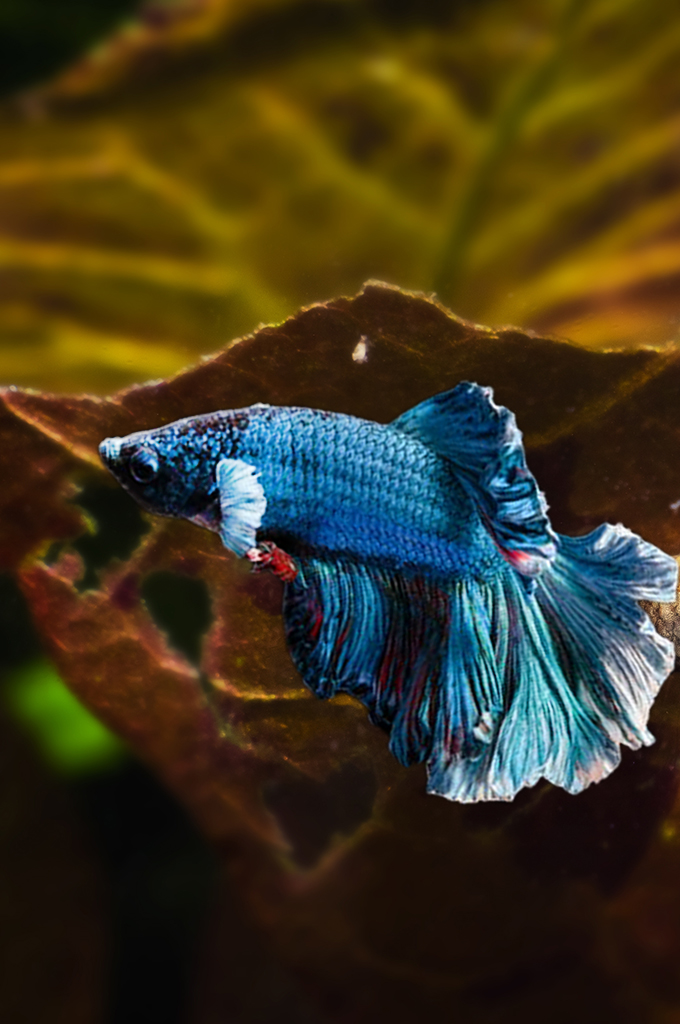

The Indian Almond Leaf – Terminalia catappa
Our hand-picked and selected leaves belong to the Terminalia catappa tree. The species is native to Southeast Asia, and many aquarists report that these leaves can cure sick fish, aid in spawning, and reduce animal stress, among many other benefits.
This plant is constantly the subject of research, including its potential for water treatment.
In addition to being used in Asian folk medicine for centuries, it is widely used as a tonic and in the treatment of ornamental fish throughout Asia. The Orientals long kept this secret, but now both the product and the information have finally become accessible.
This article will talk about how our premium Matchimaa leaves affect your aquarium water quality.
Indian Almond Leaf in the aquarium water
As the water from our taps does not always have the ideal parameters for the maintenance of some fish, almond leaves improve some conditions; in this way, we replicate the natural habitat of fish, mainly tropical fish from acidic waters such as those that come from some places in Asia and from South America
When added to the aquarium, almond leaf gradually deteriorates, releasing substances beneficial to fish and aquarium water. The primary substances are phenols, acids, and tannins.
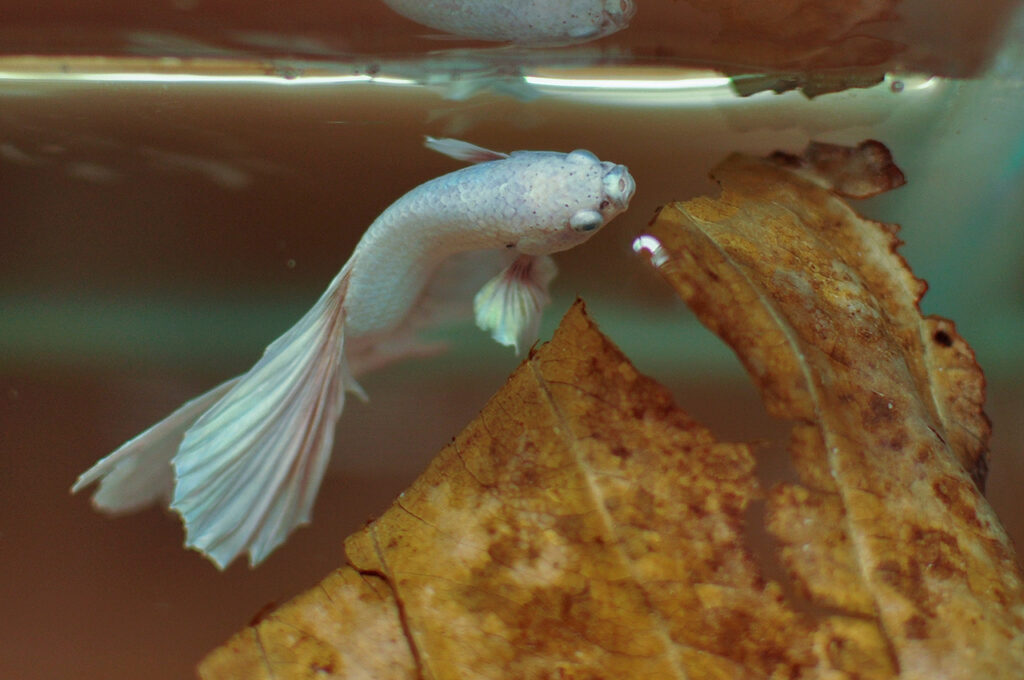
These substances actively help decrease the hardness and subsequently the pH of the water. Almond leaves have reduced much of the water hardness (GH), benefiting those who only have hard water available in their taps. Other studies have noted that the plant can absorb contaminants and substances such as some heavy metals and medicines from the aquarium water.
As the leaves release acids such as humic and tannic (which are present in higher concentrations), the pH and hardness of the water are reduced. This effect is accomplished so that if you want a natural solution to lower the pH levels in your aquarium, our Matchimaa almond leaves will help you achieve this.
About water dyeing
As the leaves release tannins, the water can turn a yellowish or brownish color, similar to dipping a tea bag in a cup of hot water. This yellow water can come as a big surprise; more experienced aquarists call aquariums with this shade of water ‘Blackwater Aquariums’.
You might be surprised to learn that this yellowish water is excellent for many fish species. Most aquarium fish species come from acidic waters, with a dark brown color; this tone is achieved due to the thousands of leaves that fall into the waters throughout the year. So, through our leaves, you can bring all that naturalness into your home.
While some might find this dark water ugly or strange, this color helps reduce stress in fish like Betta. And since stress is the number one cause of death in fish, a little yellowish water is a small price for your animals’ well-being.
If you have ever bred tropical fish, you know that eggs are normal to get mold. The antifungal properties of almond leaves prevent this from happening, which is another benefit of having yellowish water.
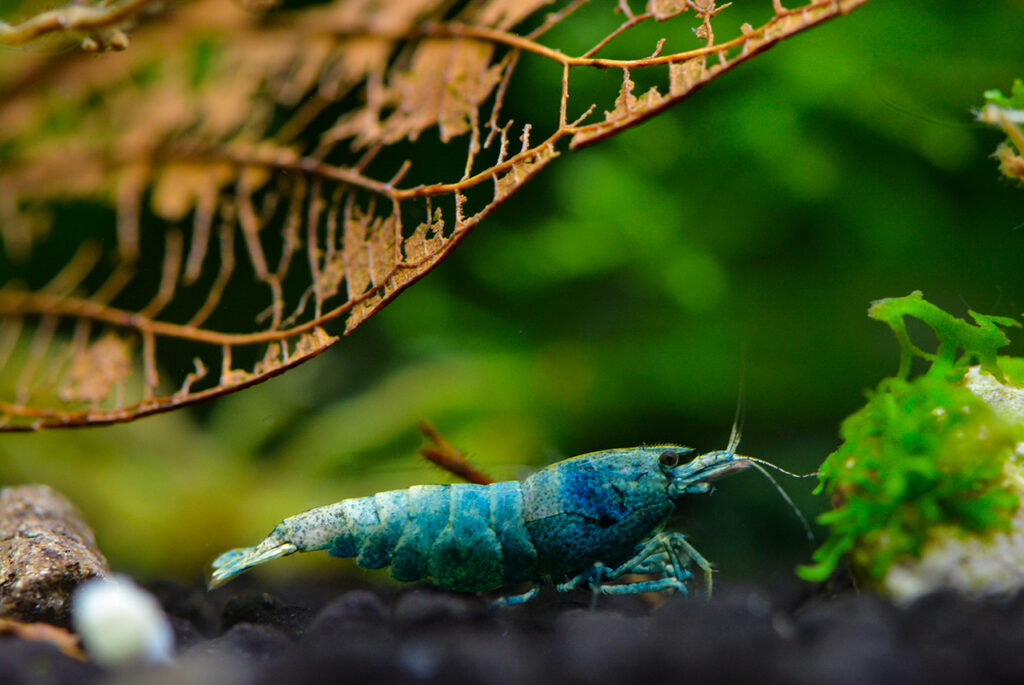
Not only fish benefit, but freshwater and acidic shrimp as well; several species even enjoy eating the dry leaves of T. catappa, so the user is encouraged in shrimp aquariums, both for a sensible environmental improvement for the action of strengthening the immune system of these invertebrates.
Remember that you can always use activated charcoal to make your water crystal clear again. Activated charcoal will do all the hard work for you, reducing yellowing or eradicating it in no time.
Be aware that activated charcoal will continue to absorb tannins until saturated. When this occurs, it will need to be replaced. Eradicating the tannins will also prevent the almond leaves from lowering the aquarium’s pH levels to a satisfactory degree.
Conclusion
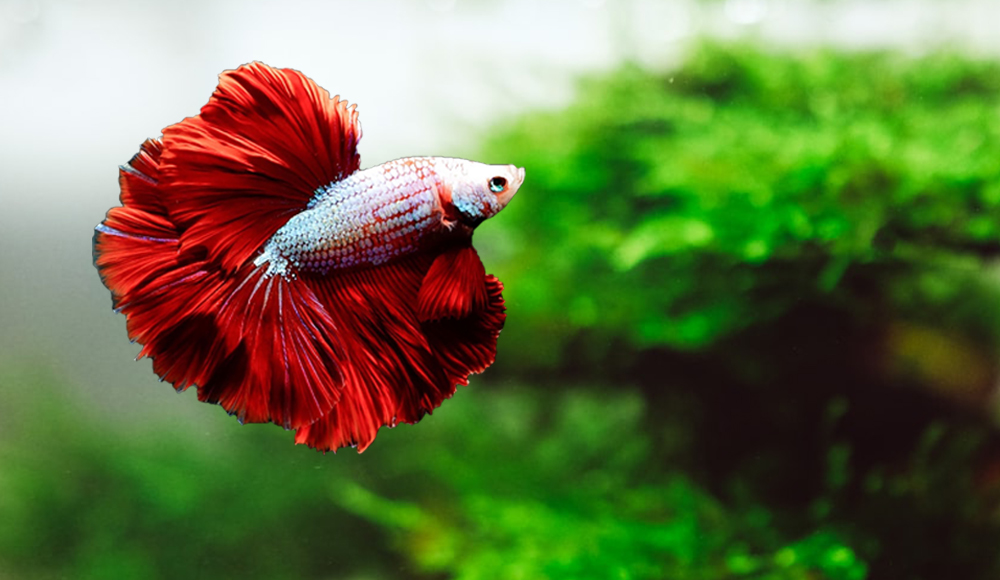
Habitats such as the ones that Betta lives, rich in organic matter that acquire water with a more yellowish or dark tone, are called blackwater. The water reached this coloration due to the decomposition of layers of leaves.
Blackwater habitats are typically acidic, with very low water hardness. Therefore, almond leaves help the water mimic these conditions – making your fish feel right at home.
Our natural dried leaves of T. catappa are traditionally used by breeders of different fish such as Bettas, Killifish, Discus, Tetras, and other tropical fish. However, it is easy to find references for use with several other species such as, for example, Rasboras and Carps.
Almond leaves still play an essential role in the breeding and reproduction of many fish. They are wide, float well, and don’t break too quickly; they are often used in betta bubble nests. The bubble nest below the leaf will keep it from sinking even after soaked.
Improve your fish and aquarium healthy. Purchase our unique leaves at


How about knowing more uses for our premium leaves? Go to articles and read more information on our blog.
(2021). Terminalia catappa shell as low-cost biosorbent for the removal of methylene blue from aqueous solutions . Journal of Industrial and Engineering Chemistry, (), –. doi:10.1016/j.jiec.2021.01.028
Antiparasitic, Antibacterial, and Antifungal Activities Derived from a Terminalia catappa Solution against Some Tilapia (Oreochromis niloticus) Pathogens C. Chitmanat, K. Tongdonmuan, P. Khanom, P. Pachontis and W. Nunsong Department of Fisheries Technology College of Agricultural Production Maejo Un
Effect of Indian almond, Terminalia catappa leaves water extract on the survival rate and growth performance of black tiger shrimp, Penaeus monodon post larvae Mhd Ikhwanuddin, Julia H. Z. Moh, Manan Hidayah, Abu B. Noor-Hidayati, Nur M. A. Aina-Lyana, Abu S. Nor Juneta AACL Bioflux, 2014, Volume 7, Issue 2. http://www.bioflux.com.ro/aacl
Folha de amendoeira (Terminalia catappa) como aditivo promotor de crescimento em rações para alevinos de Tilápia do Nilo (Oreochromis niloticus) Elton Lima Santos, Ana Paula Lira Souza, Edvânia da Conceição Pontes, Lucas da Silva Gonzaga, Ana Janaina dos Santos Ferreira. Agropecuária Técnica (2015) Volume 36 (1): 190-196 Versão Online ISSN 0100-7467 http://periodicos.ufpb.br/ojs/index.php/at/index
Hevira, L., Ighalo, J. O., & Zein, R. (2020). Biosorption of indigo carmine from aqueous solution by Terminalia catappa shell. Journal of Environmental Chemical Engineering, 8(5), 104290.
Hevira, L., Ighalo, J. O., Aziz, H., & Zein, R. (2021). Terminalia catappa shell as low-cost biosorbent for the removal of methylene blue from aqueous solutions. Journal of Industrial and Engineering Chemistry, 97, 188-199.
Prayitno, P., Abu Yazid, M. Z., Seyajah, N., & Sudiro, S. (2022). A Review on the Potential Applications of the Ketapang Tree in Different Areas (Terminalia Catappa). Design in Maritime Engineering, 387-402.
Anand, A., Divya, N., & Kotti, P. (2015). An updated review of Terminalia catappa. Pharmacognosy reviews, 9(18), 93.